
Healthcare Is Ready for Clinical-Grade Hiring Infrastructure

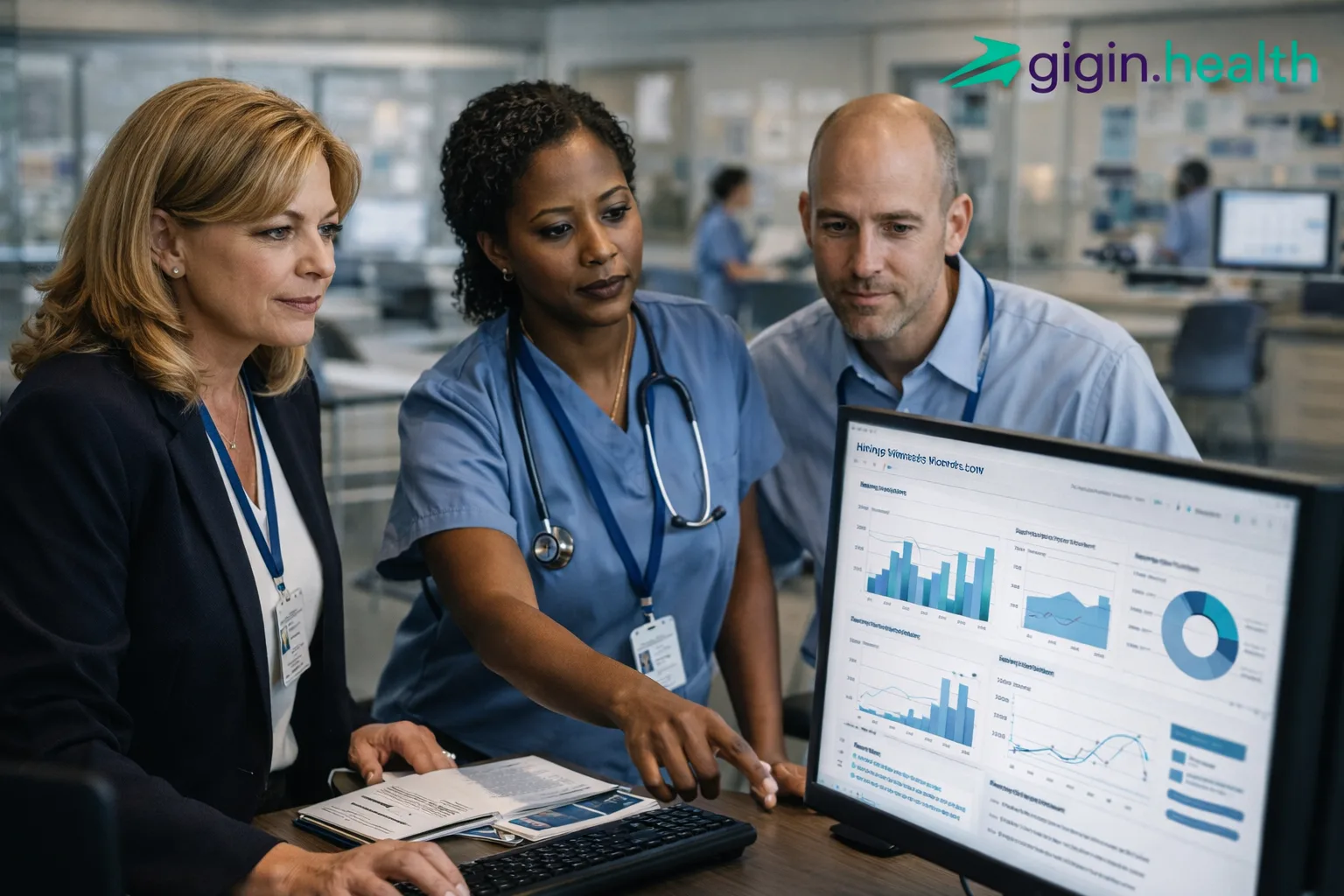
At some point, a market’s problems stop looking like isolated inefficiencies and start looking like evidence that a new category is needed.
Healthcare hiring has reached that point.
The structural signals are all pointing in the same direction. The Bureau of Labor Statistics says healthcare occupations are projected to generate about 1.9 million openings per year on average from 2024 to 2034, and healthcare and social assistance is projected to be the fastest-growing major sector, with the largest absolute job growth. The American Hospital Association says hospitals’ labor costs reached $839 billion, nearly 60% of average expenses, and that contract labor remained a major spend category. NSI continues to show elevated RN vacancy, long time-to-fill, and high turnover costs. CAQH’s scale shows how central trust-heavy workflow infrastructure has already become in other parts of healthcare operations. Taken together, these are not signs of a sector that merely needs incremental recruiting improvement. They are signs of a sector ready for a different operating model. (Bureau of Labor Statistics)
That is why “clinical-grade hiring infrastructure” is the right idea for where the market is going.
Healthcare does not need another isolated point solution. It does not need a slightly better dashboard layered over the same fragmented process. It needs hiring systems that behave more like operational infrastructure: connected workflows, visibility across movement, lower administrative waste, earlier trust and readiness support, and stronger recruiter leverage built into the design itself. That is what the market’s own pressures now demand. (aha.org)
This is also why the category language matters. Calling something an ATS is no longer enough if the underlying buyer problem is workflow fragmentation. Calling something AI-powered is no longer enough if the market has already become skeptical of AI without proof. The more useful framing is infrastructure: a system that helps organizations move from need identification to work-ready staff with less waste, better control, and more dependable speed. (JAMA Network)
That is where Gigin.Health is trying to position itself. The site describes the product as a healthcare ATS plus an agentic suite, powered by Gia, with workflow support spanning application to onboarding, automated credential checks, predictive staffing insights, and healthcare-specific usability. It also presents proof-oriented claims such as 5x faster hiring, under-1-second matching, 90% satisfaction, and adoption across 1,000+ companies and 500+ healthcare organizations. Whether every buyer interprets the category in the same terms is less important than the underlying direction: this is a move toward infrastructure, not just software. (gigin.health)
The recruitment community should take that shift seriously. The old conversation was about hiring tools. The next conversation is about whether healthcare employers have a hiring system strong enough to function under structural growth, workforce stress, and trust-heavy operating conditions.
Healthcare is ready for that conversation now. In many places, it is overdue.
Healthcare organizations and staffing teams ready to move toward a more connected, healthcare-specific hiring infrastructure can explore Gigin.Health via gigin.si or write to info@gigin.ai.
Further reading
- Costs of Caring: Challenges Facing America's Hospitals as They Care for Patients in 2026 — American Hospital Association (AHA)
- Fast Facts on U.S. Hospitals, 2026 — American Hospital Association (AHA)
