
Observability Is the Difference Between Demos and Products

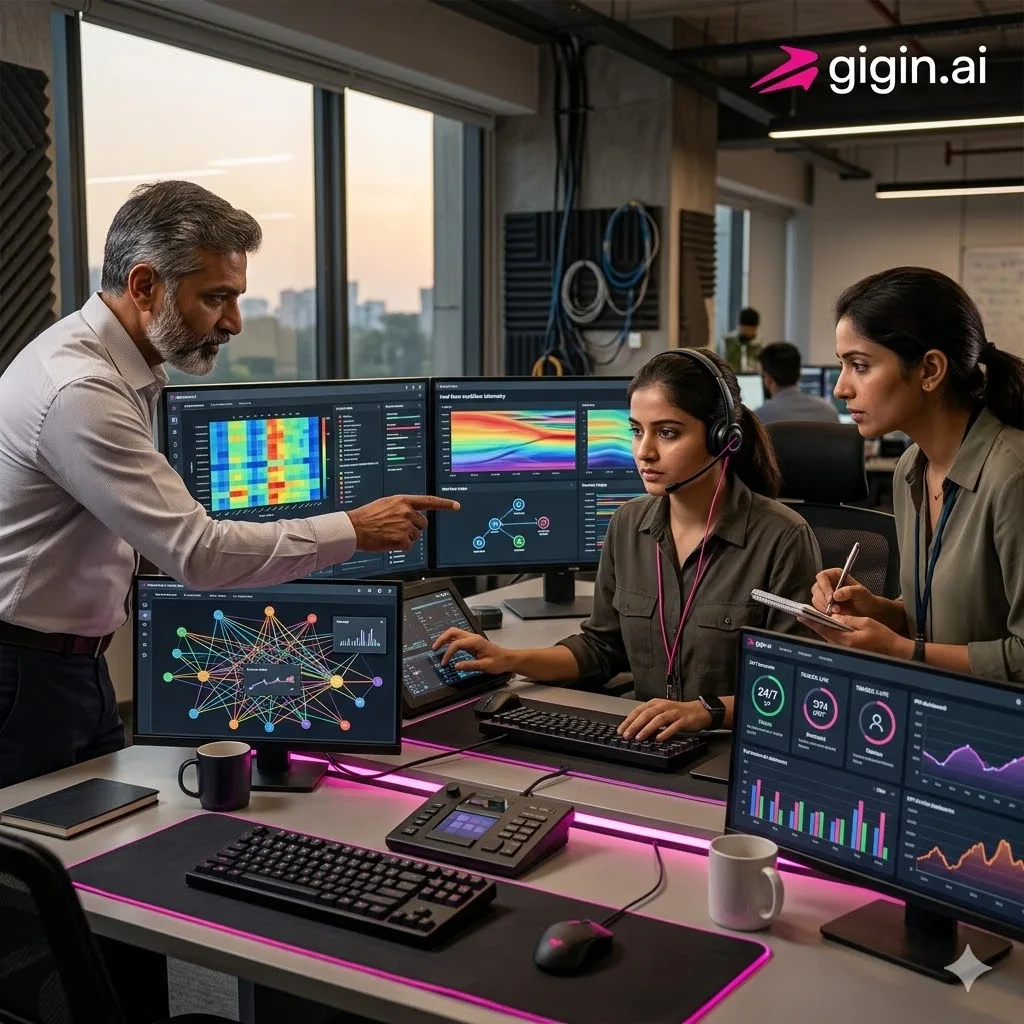
Most agentic products look far better in a demo than they do under pressure.
That is not because the model suddenly becomes worse. It is because production exposes everything the demo hides: tool latency, poor routing, ambiguous state, weak handoffs, missing guardrails, inconsistent memory, and fragile retries. This is why observability matters so much. OpenAI’s Agents SDK includes built-in tracing that records LLM generations, tool calls, handoffs, guardrails, and custom events, and the trace dashboard is explicitly positioned for debugging, visualization, and monitoring during both development and production. That is a very strong signal about how serious builders now think: if you cannot observe the workflow, you do not yet control it. (OpenAI GitHub)
The broader trend makes this even more important. NVIDIA says 44% of companies were deploying or assessing AI agents in 2025. As more enterprises move beyond prototype mode, the demand for systems that can be monitored and debugged will rise sharply. Observability is no longer an engineering luxury. It is part of whether the product can survive real deployment. (OpenAI)
Hiring is a perfect example of why this matters. A recruiting workflow can appear healthy while quietly failing in important ways: the wrong candidates are surfaced too often, stage transitions degrade under variation, interview coordination creates hidden friction, or trust-sensitive actions happen at the wrong time. If the team has no strong observability layer, those failures become anecdotal. Product quality gets judged by complaints rather than by traceable system behavior. That is a weak foundation for an AI product. (OpenAI GitHub)
This is why Gigin should keep signaling a production mindset in its technical narrative. It does not need to reveal proprietary telemetry design to make the point. It is enough to say that the future of hiring infrastructure will belong to systems that are not only intelligent, but observable — systems where workflow quality can be monitored, failures can be traced, and product decisions can be grounded in how the system actually behaves rather than in how it was supposed to behave. That is a much more credible posture than simply claiming agentic sophistication. (OpenAI GitHub)
The industry will increasingly learn that demos are cheap and observability is expensive for a reason. Demos show intent. Observability shows whether the product deserves trust.
That is why observability is the difference between demos and products.
Further reading
- How AI Is Driving Revenue, Cutting Costs and Boosting Productivity for Every Industry in 2026 — NVIDIA
- AI Agent Observability: Tracing, Testing, and Improving Agents — LangChain
- Agent Observability — Datadog
