
Recruiting Cannot Be Separated From Training Pipelines

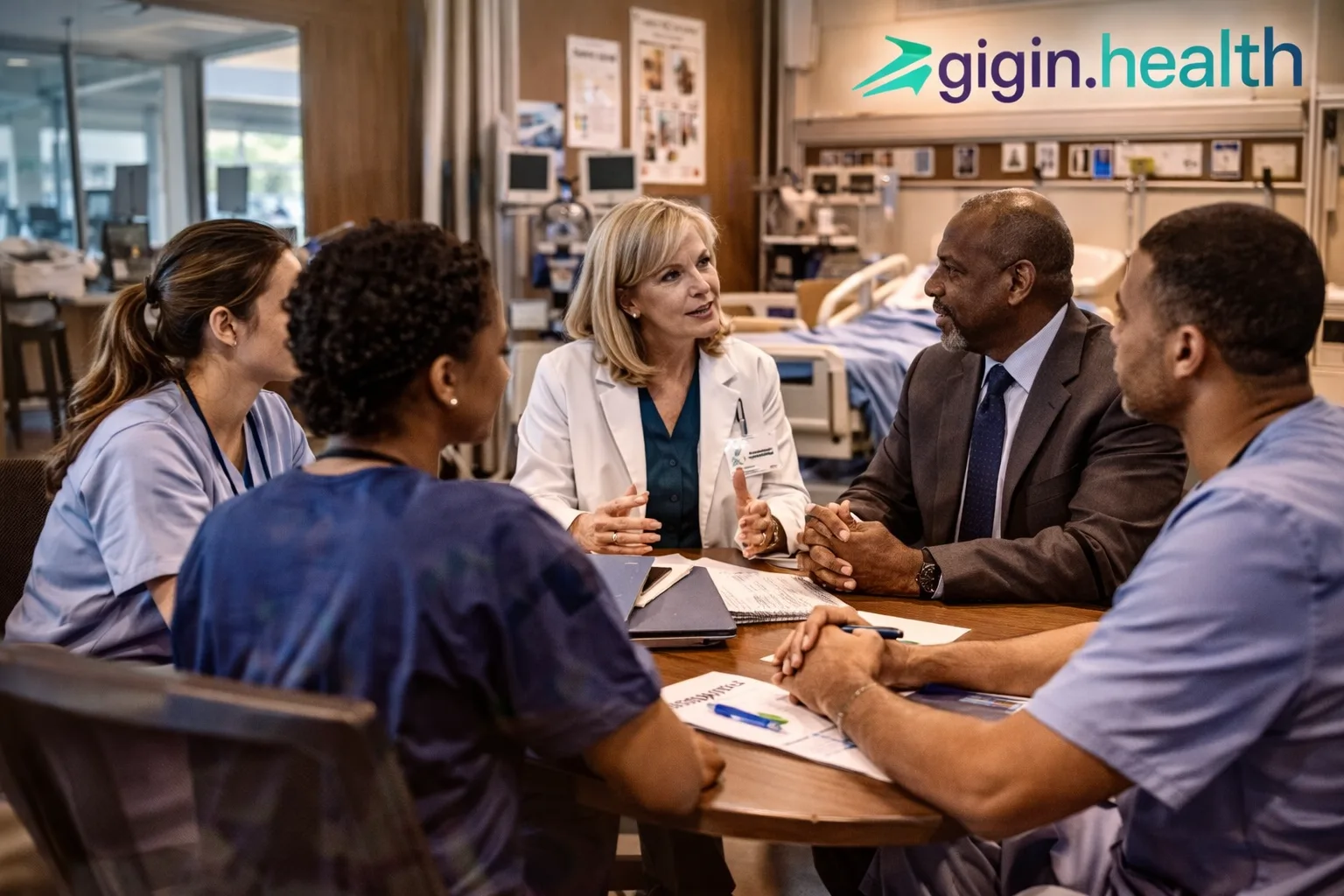
Healthcare hiring becomes fragile when organizations behave as though the labor market is simply something they buy from.
That mindset no longer works. The American Hospital Association’s workforce scan argues that employers must work closely with educational institutions to help reexamine and restructure clinical training programs, identify current and future staffing needs, and ensure there are enough places to train the right professionals. The 2025 AHA workforce scan continues in the same direction, highlighting partnerships with schools and community organizations to create new pathways into healthcare careers and expand training pipelines. (aha.org)
That is a strategic point, not a social one. Many of healthcare’s hardest hiring problems cannot be solved at the requisition stage because they were shaped years earlier by training capacity, pipeline design, career access, and placement structure. By the time the opening appears, the underlying supply conditions are already baked in. This means employers that only compete at the point of hire are competing too late to influence some of the most important drivers of workforce availability. (aha.org)
This is why the recruitment community needs to think beyond immediate conversion metrics. Recruiting is still essential at the point of demand, but workforce resilience is increasingly tied to earlier-stage pipeline formation. Hospitals, clinics, staffing firms, and health systems that collaborate with schools, training institutions, and community pathways are not doing public relations. They are shaping future labor supply.
That does not remove the need for a strong hiring engine. In fact, it makes the need stronger. Building talent pipelines only creates value if the organization also has a hiring workflow capable of converting those pipelines into work-ready staff with less friction. If the top of the funnel gets stronger but the movement through the system remains fragmented, much of the value is lost before it becomes operational.
That is where Gigin.Health becomes a more natural part of the story. The site’s positioning around a healthcare ATS plus agentic suite, one workflow from application to onboarding, and simplified, non-technical recruiter usability fits well with organizations trying to make training pipelines more executable in practice. A pipeline strategy is only as strong as the workflow that receives it. If an employer is building stronger school, community, or program partnerships, it also needs a hiring system that can move those candidates through a connected process without adding new administrative drag. (gigin.health)
Healthcare recruiting cannot be separated from training pipelines anymore because the labor market is too constrained and too structurally pressured for that separation to remain viable.
The employers that understand this first will stop treating recruiting as a downstream transaction. They will start treating it as one part of a broader workforce-production system.
Healthcare organizations and staffing teams building stronger education and talent pipelines can explore Gigin.Health via gigin.si or write to info@gigin.ai.
Further reading
- School-to-bedside: Building a Pipeline to Support America's Health Care Future — American Hospital Association (AHA)
More from Gigin
- Pipeline Building Wins Where Bonus Wars Fail
- The Frontline Roles We Underrate Are the Ones Holding the System Together
- Recruiter Headcount Is Not Keeping Pace With Hiring Pressure
- Healthcare Does Not Need More Hiring Tools. It Needs One Connected Workflow.
- Workforce Is No Longer Just an HR Budget Line. It Is an Operating Strategy.
