
How Personalized Hiring Interfaces Are Really Built

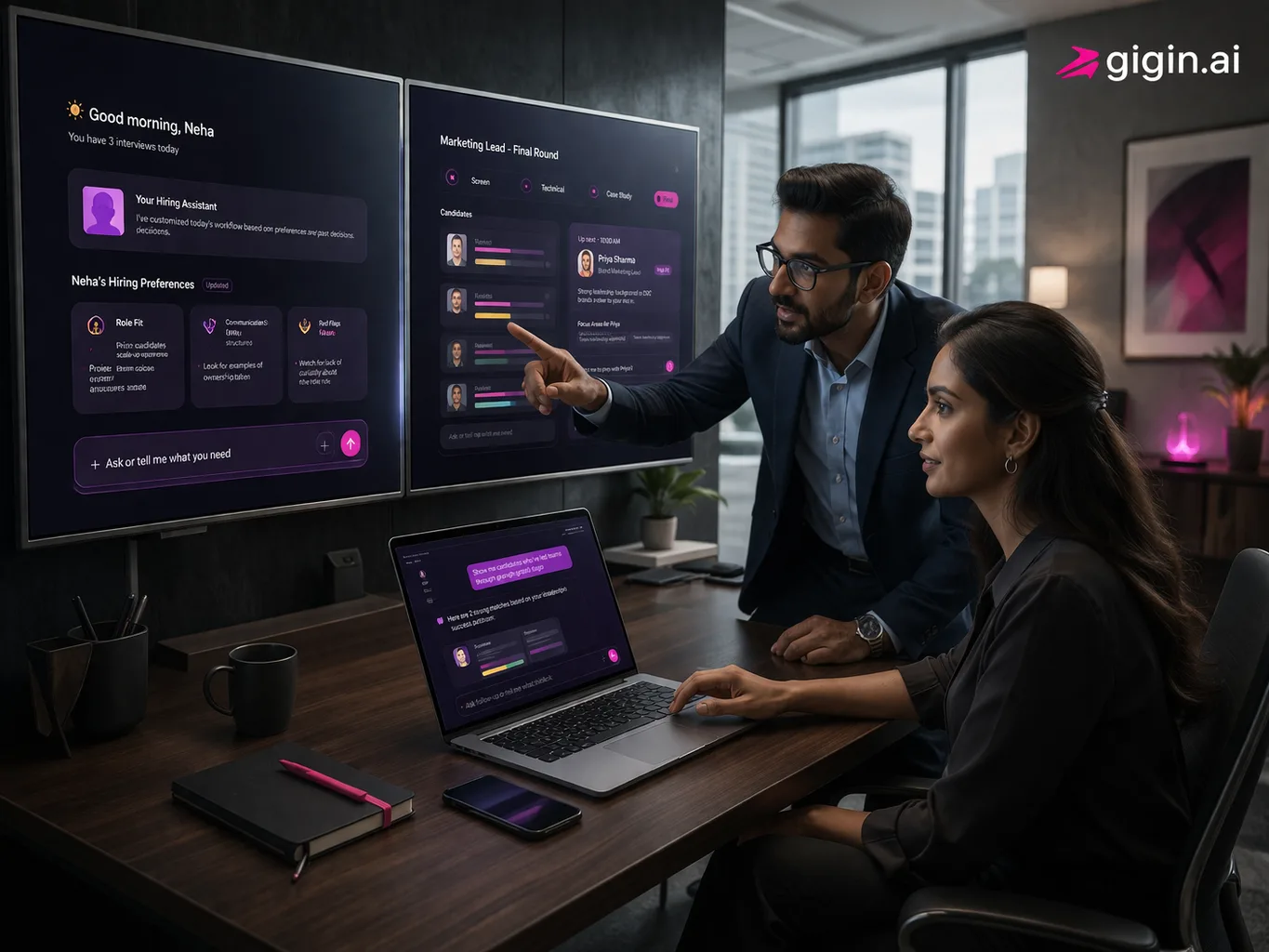
Most software talks about personalization too early and too lightly.
In many products, personalization means little more than recommendation order, minor UI adaptation, or a better guess at what the user wants. That is not worthless. But it is not deep personalization either. Real personalization happens when the system becomes more relevant because it understands more of the user’s context, workflow, intent, and history over time. Microsoft’s Work IQ is one of the clearest public examples of this direction. Microsoft describes it as an intelligence layer built on data, memory, and inference, designed to understand not just the organization’s information but also the user’s preferences, habits, workflows, and relationships. The whole point is to make the product feel progressively more aligned with how the person actually works. (Microsoft)
That is the right conceptual model for hiring as well.
A recruiter does not need generic help. A recruiter needs help that is specific to the role, the stage, the urgency, the talent pool, the trust requirements, and the pattern of previous actions already taken. A system that keeps treating every role and every interaction as if it were broadly similar will remain shallow, even if the interface looks modern. Personalization in hiring is not mainly about cosmetic convenience. It is about reducing friction by making the product progressively more aware of what matters now.
This is also why context and memory design matter so much. Anthropic’s context engineering work argues that context is finite and must be curated with care. If the system cannot determine what information is actually relevant at a given moment, then any so-called personalized interface will eventually degrade into noise. In other words, personalization is not just a UX problem. It is an architecture problem. (Anthropic)
That is one of the reasons Gigin’s broader technical posture is interesting. Gigin is not simply pursuing a prettier recruiting interface. It is moving toward a more conversational, context-aware hiring experience where intelligence gets stronger as workflow context accumulates. Publicly, that is the right level to describe it. The deeper point is that personalization only becomes real when the system has enough structured continuity underneath it to make each interaction more relevant than the last one.
That is what makes the “ChatGPT-like interface” idea meaningful in enterprise hiring. Not the chat surface itself, but the fact that the system can potentially become a more natural operating interface for a complex workflow.
The best hiring interfaces of the next few years will not win because they look modern. They will win because they feel like the product actually knows what the user is trying to move.
That is what real personalization looks like.
And that is where the category is going.
Further reading
- A closer look at Work IQ — Microsoft Community Hub (Microsoft 365 Copilot Blog)
