
Vector Databases Alone Are Not Memory

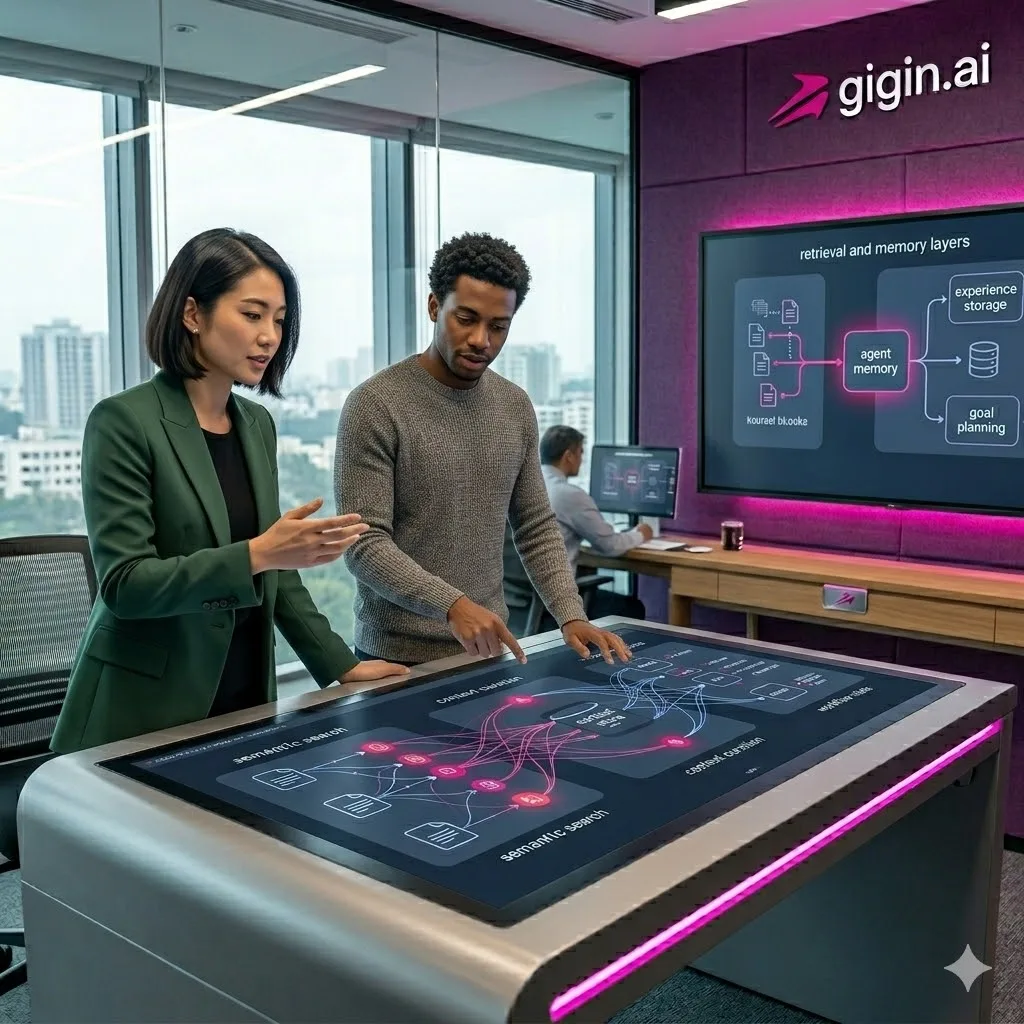
One of the most common shortcuts in AI product thinking is to assume that retrieval equals memory.
It does not.
Vector databases are important. Retrieval is important. But memory in a serious system is more than semantic lookup. It involves deciding what should persist, what should decay, what should be summarized, what should be reintroduced, and what should influence future action. Anthropic’s Contextual Retrieval work is useful here because it showed that retrieval quality can improve materially when context is prepared more intelligently: failed retrievals were reduced by 49%, and by 67% with reranking. That is a strong result, but it also reveals the deeper truth. Better retrieval is not just about storing embeddings. It is about how the system curates and re-presents context. (Anthropic)
Anthropic’s later writing on effective context engineering pushes the same point from a broader system-design perspective: context is finite, valuable, and must be deliberately managed. Microsoft’s Work IQ narrative also reinforces that memory is not simply data access; it is built on data, memory, and inference together. The shared implication across these companies is clear: if a system wants to feel consistently useful, it cannot rely on vector lookup alone. It needs a memory strategy. (Anthropic)
This matters directly in hiring.
A recruiter’s workflow does not only need retrieval. It needs remembered priorities. It needs continuity in what the role actually means now, not only what the job description once said. It needs awareness of what actions have already happened, which candidates were already touched, which constraints became important, and which trust or workflow signals should influence what comes next. A vector database can help with retrieval. It cannot by itself define what should matter in the future state of the product.
That is one of the reasons Gigin’s architectural direction is compelling at a high level. The point is not that the company uses vector databases. Many companies do. The point is that Gigin is moving toward a more context-aware hiring system, where retrieval is part of a broader memory and workflow philosophy rather than the whole story. That is the stronger technical position because it recognizes that intelligent software is not built by storing more. It is built by deciding what should remain meaningful.
The market will eventually learn to separate memory from retrieval more clearly.
When it does, many products that look “smart” today will start to feel thin. The ones that will hold up are the ones that understand that memory is an operating design problem, not just a database choice.
That is a very important distinction.
And it is one Gigin should continue to articulate carefully.
