
Human-in-the-Loop Is Not a Compromise. It Is Correct Architecture.

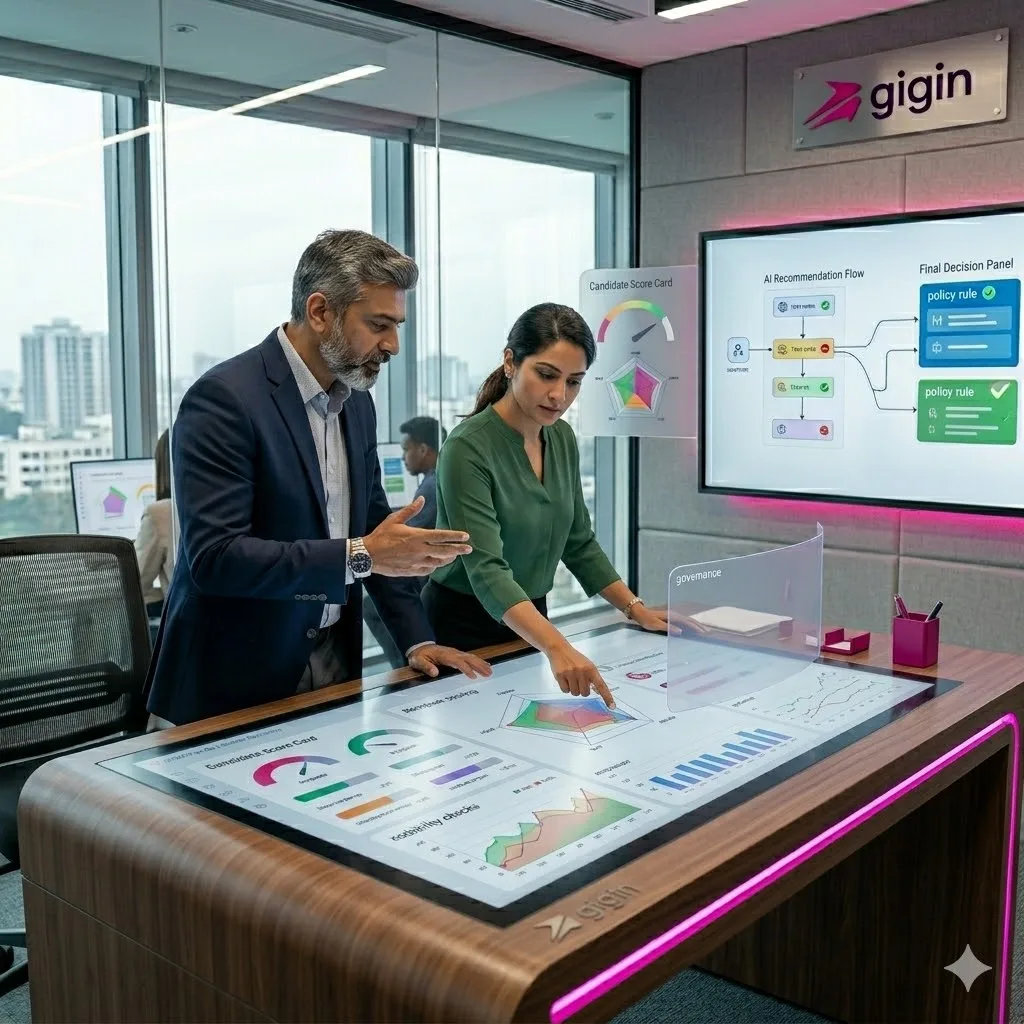
A surprising amount of AI commentary still treats human involvement as a temporary weakness.
That framing is wrong, especially in enterprise workflows. NIST’s Generative AI Profile is built around the idea that organizations must incorporate trustworthiness into the design, development, use, and evaluation of AI systems. OpenAI’s agent guidance similarly positions guardrails and controlled tool use as core parts of production-grade design, not signs that the system is somehow less advanced. In other words, governed human oversight is not a concession. It is one of the ways serious systems remain safe, useful, and accountable. (NIST)
This matters even more as agent adoption rises. Microsoft says 81% of leaders expect agents to be moderately or extensively integrated into their AI strategy soon. That means the industry is not moving toward a world where humans disappear from decision loops. It is moving toward a world where more workflows will require explicit decisions about when systems should act, when they should suggest, and when they should escalate. Human-in-the-loop design is how that boundary gets made real. (OpenAI Developers)
Hiring is a particularly clear case. The process is not only about speed. It is also about judgment, trust, prioritization, and downstream consequences. In domains like this, the strongest software usually does not try to remove humans from the loop entirely. It removes humans from the wrong parts of the loop: repetitive coordination, redundant information transfer, mechanical follow-up, and low-value process work. What remains is the part where human judgment still creates disproportionate value. (OpenAI)
This is why the right public way to describe Gigin’s direction is not “fully autonomous hiring.” It is better to say Gigin is building toward a workflow-native, human-aware system where intelligence reduces friction, preserves continuity, and supports users without pretending that governance and oversight are relics of the pre-agent era. That is a much stronger technical and strategic stance. It aligns with where serious enterprise AI is going, not where hype is going. (OpenAI)
The market will eventually stop treating human-in-the-loop as a hedge and start treating it as an architectural principle. The companies that understand that early will build products that buyers trust faster and scale further.
Human-in-the-loop is not a compromise.
It is correct architecture.
