
Rural Healthcare Does Not Need More Hope. It Needs Better Workforce Operating Models.

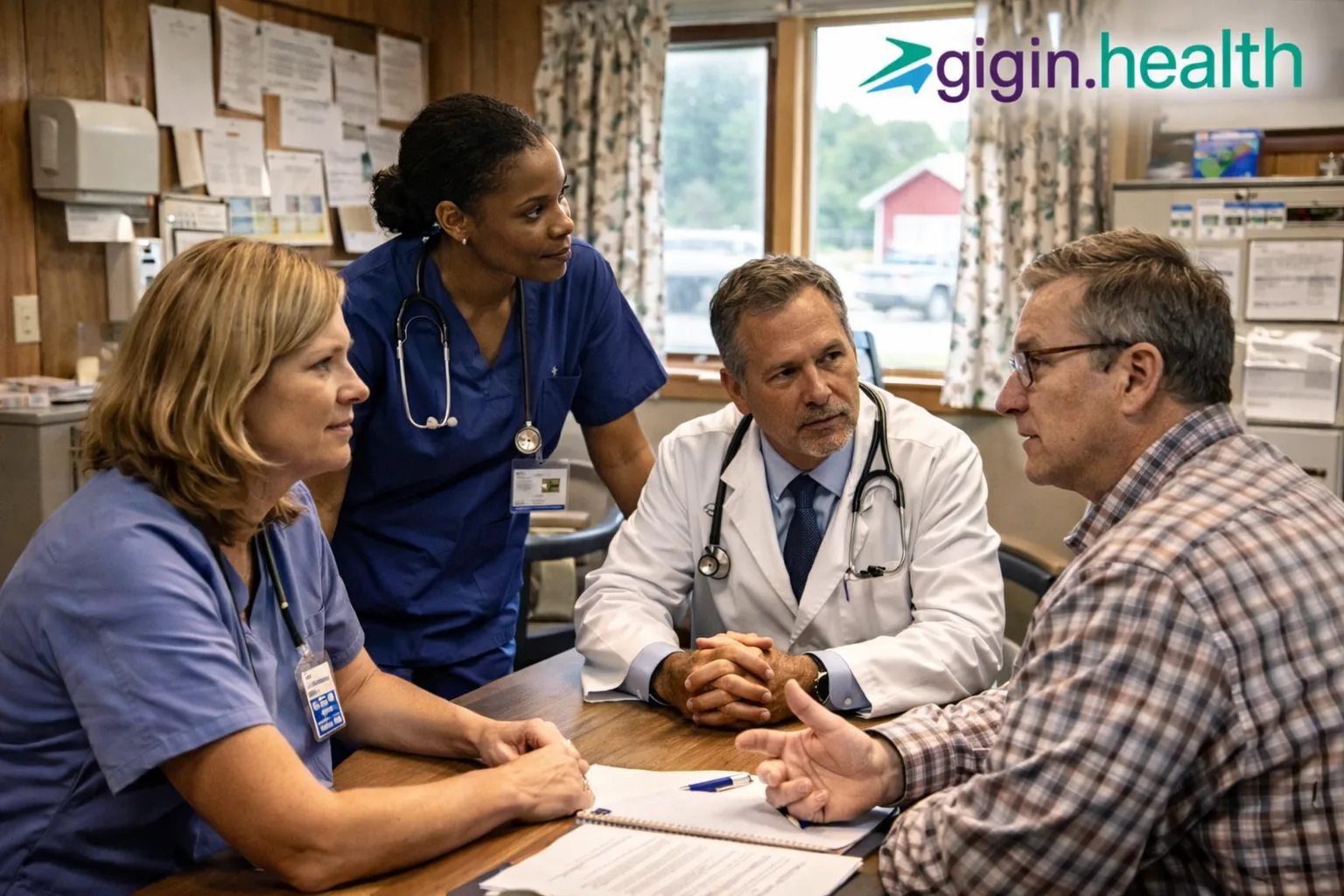
Rural healthcare is often discussed in broad moral language—access, equity, shortage, community need. All of that matters. But what rural providers increasingly need is not more vague concern. They need better operating models.
The pressure is severe. The American Hospital Association’s January 2026 rural AI and workforce piece says nearly half of rural hospitals operate at a financial loss and that workforce shortages, geographic isolation, aging infrastructure, and administrative strain continue to threaten their viability. Reuters recently reported a similar picture, noting that over 40% of rural hospitals operate at a loss and that many rely heavily on fragile reimbursement and low-volume economics. (aha.org)
That context changes how recruiting should be approached.
Rural hospitals and clinics cannot rely on the same assumptions as large urban systems. They have smaller labor pools, less slack, thinner margins, and less room to absorb inefficiency. Every broken workflow, every slow handoff, every recruiter hour lost to repetitive admin, and every preventable delay in candidate movement costs more because the organization has fewer buffers.
That is why rural hiring is not simply an access challenge. It is a systems challenge.
When resources are constrained, the value of better workflow design rises sharply. Rural employers do not need technology that adds more screens or more complexity. They need operational compression: fewer steps, cleaner movement, stronger visibility, and more output from the people already doing the work. In that setting, AI and automation only matter if they reduce real burden without requiring enterprise-scale overhead to manage them. The AHA’s own rural AI piece makes exactly this point, framing the most useful AI use cases in rural health as pragmatic and targeted rather than flashy. (aha.org)
That is where Gigin.Health can be read as part of the right category direction. Its public positioning around a healthcare ATS plus agentic suite, Gia as the AI recruiter, and one workflow from application to onboarding is particularly relevant in constrained environments because the value proposition is essentially leverage: reduce repetitive process effort, improve candidate movement, and make hiring less dependent on manual coordination. In rural settings, where recruiter bandwidth and administrative capacity are especially scarce, that kind of workflow discipline matters even more. (aha.org)
The rural workforce challenge is real, but it should not be romanticized. The strongest response is not inspirational language about doing more with less. It is designing systems that actually let organizations do more with less waste.
That is the more honest agenda for rural healthcare hiring now: not more hope, but better operating models.
Healthcare organizations and staffing teams working in rural or resource-constrained care environments can explore Gigin.Health via gigin.si or write to info@gigin.ai.
Further reading
- 5 Innovations Strengthening Rural Health Care Workforce — American Hospital Association (AHA Center for Health Innovation Market Scan)
- Workforce Development Drives Solutions to Rural Healthcare Shortages — Westat
More from Gigin
- The RN Recruiting Clock Is Still Broken
- Healthcare Hiring Is No Longer a Support Function. It Is Infrastructure.
- Healthcare Does Not Need More Hiring Tools. It Needs One Connected Workflow.
- Staffing Stability Matters More Than Most Healthcare Systems Admit
- Home Health Is Where the Hiring Crisis Becomes Most Visible
