
Why Protocol-Driven AI Will Beat Hardcoded Integrations

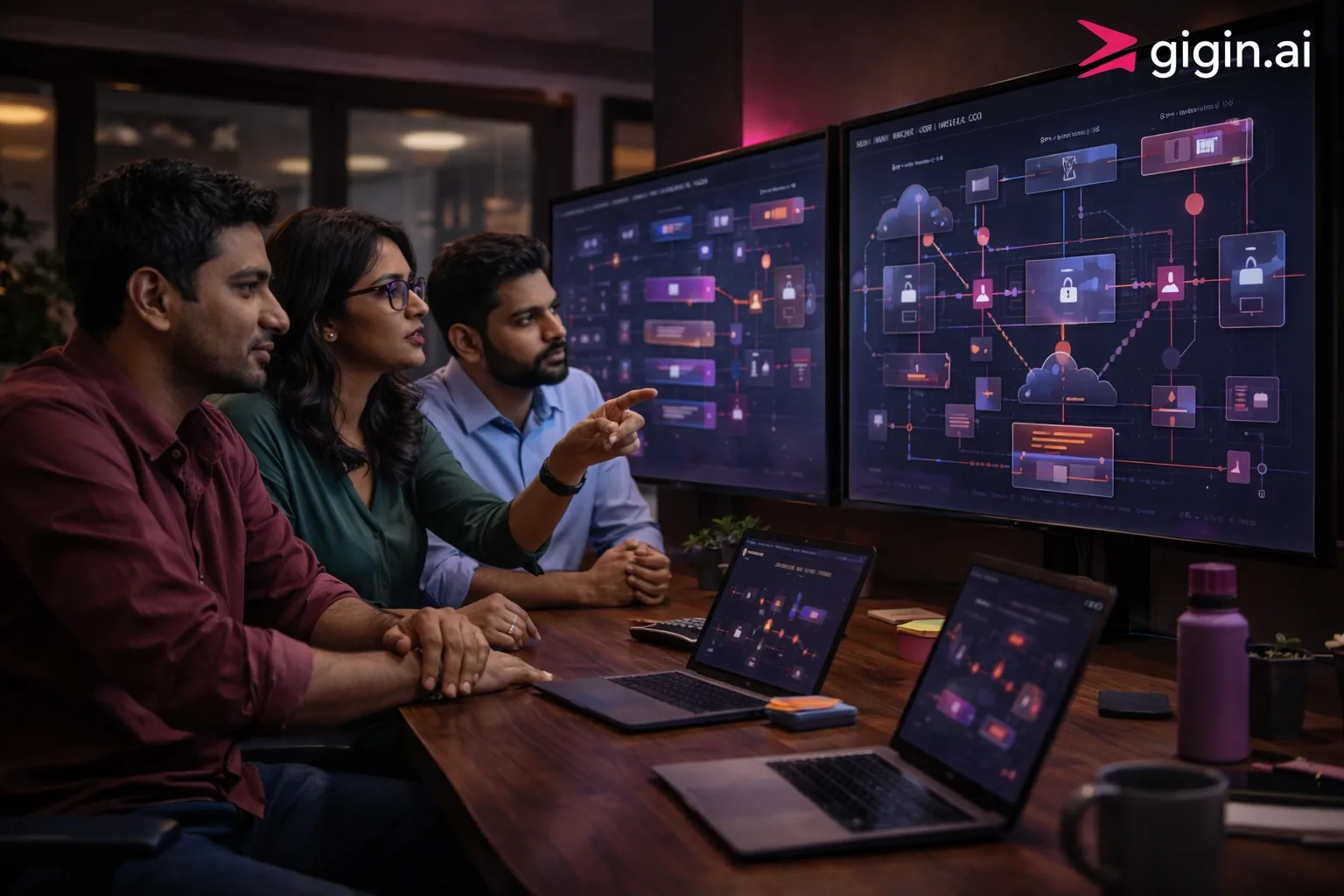
For years, enterprise software treated integrations as a necessary layer of plumbing. You built connector after connector, maintained custom mappings, and accepted that interoperability would always be expensive, brittle, and slower than product teams wanted.
AI is changing that assumption.
The reason is not just that systems now need more data. It is that they need more usable context and more actionable connectivity. Anthropic introduced the Model Context Protocol (MCP) as an open standard that enables developers to build secure, two-way connections between their data sources and AI-powered tools. Google’s Agent2Agent (A2A) protocol was introduced so agents can communicate securely, exchange information, and coordinate actions across enterprise platforms, and Google later donated A2A into a Linux Foundation effort with backing from major enterprise companies. The technical signal here is important: interoperability is moving from ad hoc connector logic toward more standardized protocols for agentic systems. (Anthropic)
That shift matters because hardcoded integrations do not age well in agentic environments. They may work for point-to-point synchronization, but they become cumbersome when systems need richer context, dynamic tool access, and multi-step coordination across workflows. Protocol-driven AI offers a different path. Instead of rebuilding one-off bridges each time a new workflow, tool, or model enters the picture, the product can increasingly rely on shared conventions for how context and actions move between systems. (Anthropic)
Hiring is a strong example of why this matters. Recruiting workflows span sourcing surfaces, ATSs, communication channels, trust or verification layers, and downstream process movement. If every connection remains bespoke, intelligence stays thinner than it looks. But if the underlying architecture is designed to work with more interoperable patterns, the system can become much more fluid, more context-aware, and less dependent on manual stitching. That does not eliminate engineering work. It changes where the engineering leverage sits. (Anthropic)
This is one reason Gigin’s technical direction is compelling at a category level. The company should continue to frame itself not as a vendor with a long connector list, but as a builder of a more workflow-native, interoperable hiring system. That is the stronger story because protocol-driven connectivity is increasingly where the enterprise stack is headed. Products that understand this early will be better positioned than those still treating integrations as a static checklist. (Linux Foundation)
The market will continue to value integrations, of course. But over time, the real advantage will come from architectures that are prepared for a more protocol-driven AI world.
Hardcoded integrations solved yesterday’s problem.
Protocol-driven AI is better suited to tomorrow’s.
Further reading
- Linux Foundation Launches the Agent2Agent Protocol Project — Linux Foundation
