
From Job Board to Offer: Why Full-Stack Hiring Systems Win

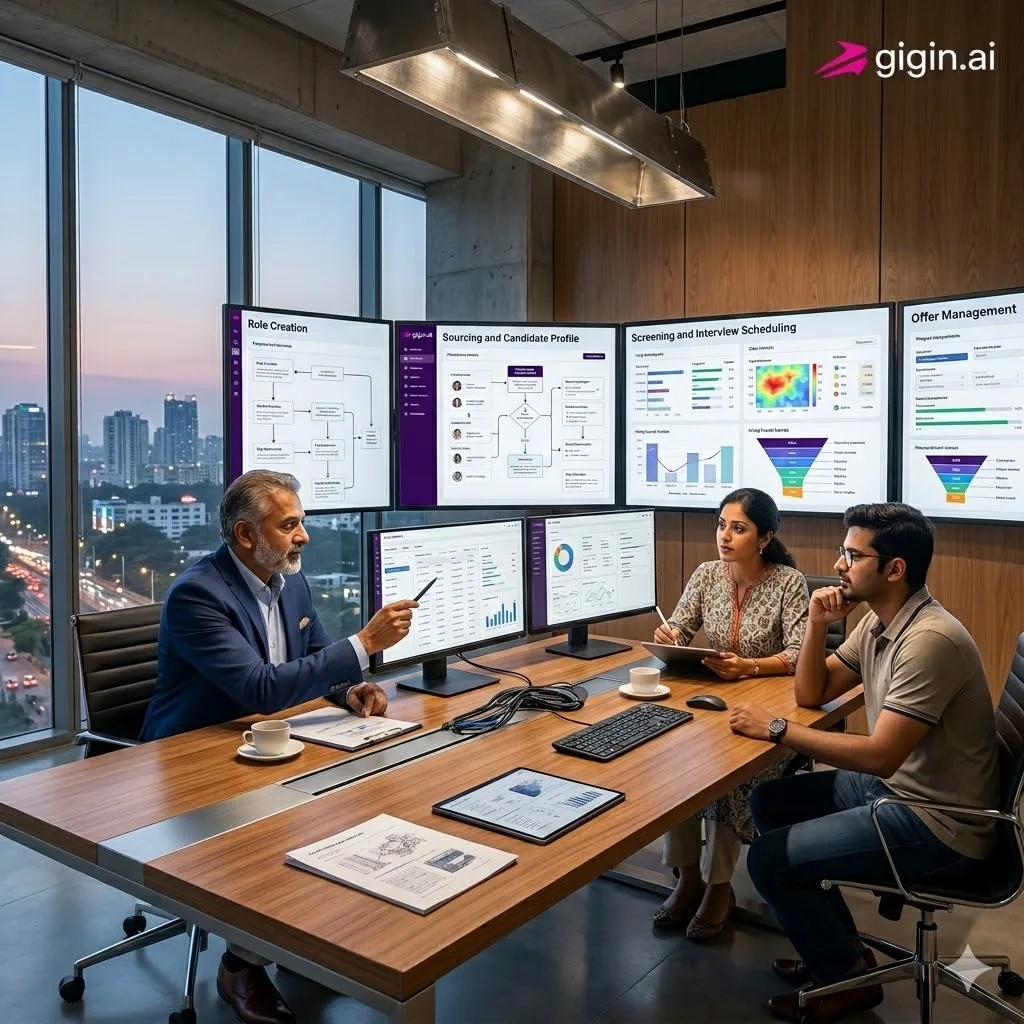
One of the least examined assumptions in hiring software is that the process can be split across products and still behave like a coherent system.
That assumption is weaker than it looks.
The broader AI ecosystem is already moving in the opposite direction. Google’s Agent Development Kit (ADK) was launched as an open-source, code-first framework for building agents and multi-agent systems, and Google explicitly says it offers precise control over agent behavior and orchestration, a rich tool ecosystem, integrated debugging, and a robust evaluation framework. OpenAI’s practical guide pushes the same general logic from another angle: for multi-step systems, use tools, state, and orchestration patterns that match the workflow’s complexity rather than treating the model output as the whole product. (Google Developers Blog)
Hiring is exactly the kind of domain where that shift matters.
A role is defined. It gets published. Candidates are discovered. Relevance is assessed. Trust and readiness matter. Interviews happen. Decisions move. Offers and onboarding create a new stage. If each part of that journey sits in a different surface with only weak continuity between them, then the recruiter becomes the human integrator. That is not just inconvenient. It is expensive. It creates switching cost, memory loss, inconsistent handoffs, and workflow drag that the business ends up absorbing as slower movement and lower confidence.
That is why full-stack hiring systems win.
Not because they are bigger.
But because they reduce fragmentation where fragmentation hurts most.
This is one of the strongest ways to understand Gigin’s direction. The company is not just trying to improve one isolated stage of hiring. It is building toward a more full-stack hiring operating model, where sourcing, workflow, trust, interoperability, and agentic intelligence reinforce each other. That is a more ambitious technical posture than building point tools because it aims to reduce the number of times a user has to mentally reconstruct the workflow across disconnected products.
The deeper payoff is not just convenience. It is system-level compounding.
When the stack is more coherent, the product can preserve context better.
When context is preserved better, personalization becomes more useful.
When personalization becomes more useful, movement through the workflow becomes more efficient.
And when movement becomes more efficient, the software starts to feel less like a toolbox and more like an operating system.
That is the category shift worth paying attention to.
The next generation of hiring software will not be defined by who ships the flashiest AI feature first. It will be defined by who turns the journey from job creation to offer into a more continuous, less fragmented, more governable system.
That is why full-stack systems win.
And that is why Gigin’s architectural direction matters.
Further reading
- AI Recruiting Software vs. an AI-First ATS: Do You Need Both? — Sprad
- Orchestration and handoffs — OpenAI (Developer docs)
